Pork grading systems are designed to evaluate carcasses and cuts based on quality, yield, and suitability for consumption or processing. Unlike beef, pork grading is generally less emphasized in retail labeling, especially in the United States, but it remains importantly relevant within production, processing, and export markets.
1. Overview of Pork Grading
Pork grading typically focuses on two main dimensions:
Quality Grade
Eating characteristics (tenderness, juiciness, flavor)
Yield Grade
Amount of usable lean meat
In many countries, pork is inspected for safety (mandatory), while grading is often voluntary or used internally within supply chains.
2. U.S. Pork Grading System
The United States Department of Agriculture (USDA) historically established pork grades, although they are now rarely used in consumer markets.
USDA Pork Quality Grades
| Grade | Description |
|---|---|
| U.S. No. 1 | High lean content, minimal fat, ideal balance for retail cuts |
| U.S. No. 2 | Slightly higher fat, still acceptable for most uses |
| U.S. No. 3 | Higher fat levels, more suitable for processed products |
| U.S. No. 4 | Excess fat, lower lean yield |
| Utility | Very low quality, mostly used for processed or industrial purposes |
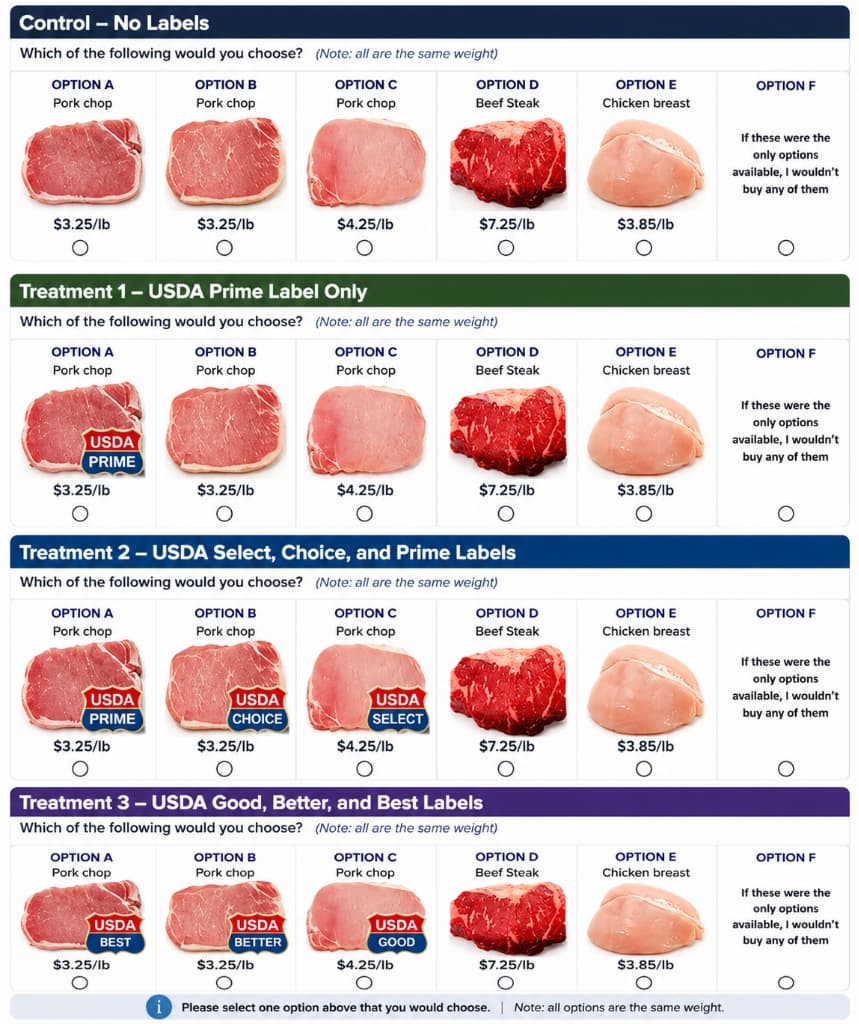
This study illustrates how applying recognizable USDA Beef labels (like Prime) to pork drastically influences consumer preference, despite USDA grading not typically being used for retail pork.
Pork Yield Grading (U.S.)
Yield grading evaluates the proportion of lean meat versus fat. Lean Yield Estimation Factors: Backfat thickness, Loin muscle area, and Carcass weight.
| Yield Grade | Lean Yield (%) | Interpretation |
|---|---|---|
| 1 | 60%+ | Very high lean content |
| 2 | 55–60% | Good lean yield |
| 3 | 50–55% | Average |
| 4 | 45–50% | Lower lean content |
| 5 | <45% | Excess fat |
3. Key Factors in Pork Quality
Unlike beef, pork does not rely heavily on marbling. Instead, other factors dominate:
3.1 Color
- Ideal: Pinkish-red
- Pale meat may indicate PSE condition
3.2 Marbling (Intramuscular Fat)
- Moderate marbling improves flavor and juiciness
- Excess fat reduces lean yield
3.3 Firmness
- Firm, slightly moist texture is preferred
- Soft meat indicates poor water-holding capacity
3.4 pH Level
- Normal: 5.6–5.8
- Affects tenderness and shelf life
4. Pork Quality Defects
Meat quality conditions heavily impact grading outcomes.
| Condition | Full Name | Characteristics | Cause |
|---|---|---|---|
| PSE | Pale, Soft, Exudative | Light color, watery, poor texture | Stress before slaughter |
| DFD | Dark, Firm, Dry | Dark color, sticky texture | Long-term stress |
| RSE | Reddish-Pink, Soft, Exudative | Intermediate condition | Genetic and handling factors |
5. International Pork Grading Systems
European Union (EUROP System)
Widely used across Europe, focusing heavily on lean meat percentage.
| Grade | Lean Meat % | Description |
|---|---|---|
| E | 55–60% | Excellent (Note: S grade is 60%+ Superior) |
| U | 50–55% | Very Good |
| R | 45–50% | Good |
| O | 40–45% | Fair |
| P | <40% | Poor |
Canada Pork Grading
Canada emphasizes lean yield and carcass measurement using automated systems.
6. Pork Grading vs Beef Grading
| Feature | Pork | Beef |
|---|---|---|
| Primary Focus | Lean yield | Marbling (intramuscular fat) |
| Consumer Labels | Rare | Common (Prime, Choice, Select) |
| Fat Preference | Lower fat preferred | Higher marbling preferred |
| Grading Usage | Industry/internal | Retail and consumer-facing |
| Aging | Minimal | Often dry or wet aged |
7. Modern Technological Grading
Today, pork grading increasingly uses automated systems.
Technologies Used
- Ultrasound scanning
- Optical probes
- AI-based imaging systems
Benefits
- Higher accuracy
- Faster processing
- Consistency across facilities
8. Pork Cuts and Quality Implications
9. Summary Chart: Pork Grading Factors
| Factor | Importance Level | Impact on Eating Quality |
|---|---|---|
| Lean Yield | High | Moderate |
| Color | High | High |
| Firmness | High | High |
| Marbling | Moderate | Moderate |
| pH Level | High | High |
| Fat Thickness | High | Moderate |
10. Key Takeaways
- ◆ Pork grading prioritizes lean meat yield and physical characteristics, not marbling.
- ◆ The U.S. system exists but is rarely used in retail.
- ◆ The EUROP system is the most widely standardized globally.
- ◆ Meat quality defects like PSE and DFD play a major role in grading outcomes.
- ◆ Modern pork grading increasingly relies on automation and data-driven evaluation.