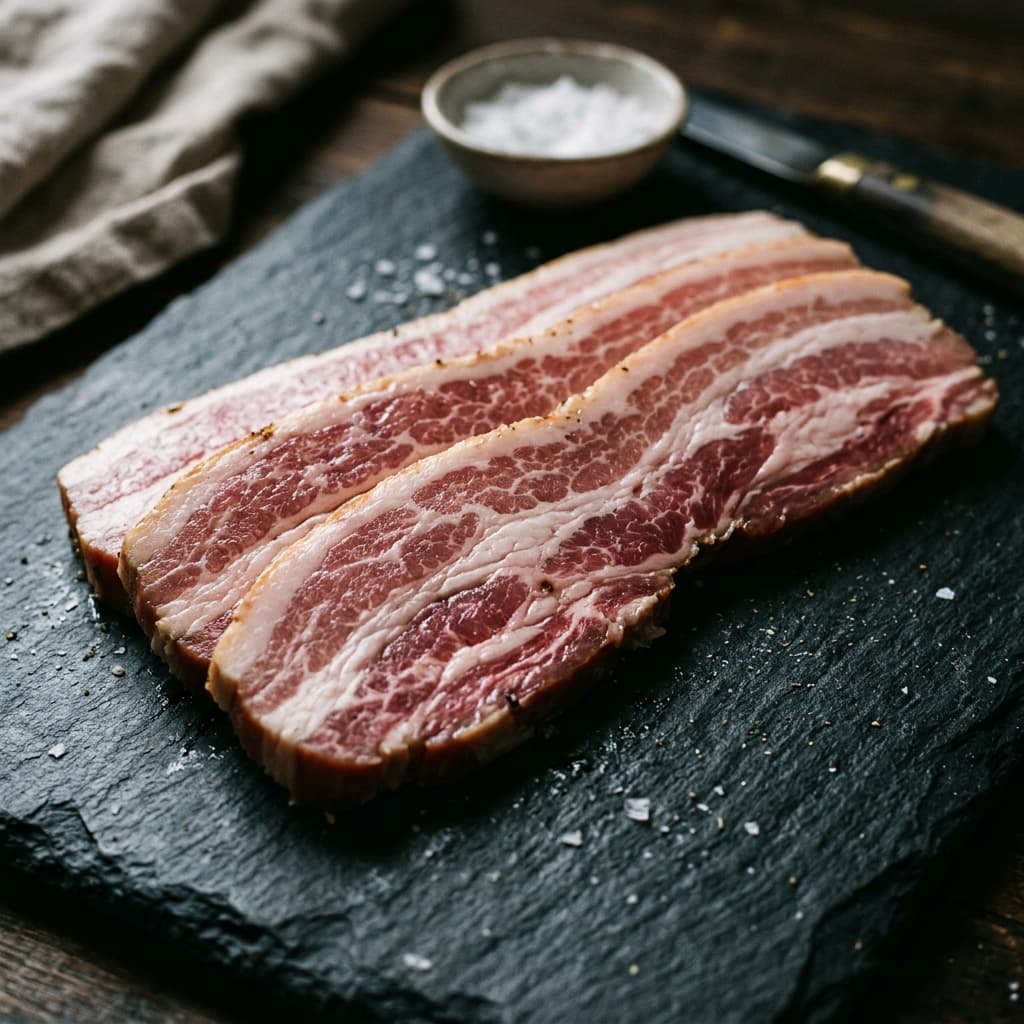
Bacon grading is the systematic evaluation of pork belly (fresh or cured) based on measurable quality attributes such as fat-to-lean ratio, thickness, firmness, color, uniformity, and overall processing quality. While bacon itself is not universally graded under a single global standard like beef, it is strongly influenced by pork carcass grading systems (e.g., USDA) and further refined by processors and buyers using internal quality specifications.
1. Foundations of Bacon Quality
Bacon originates from the pork belly, a cut composed of alternating layers of fat and lean muscle. The grading of bacon focuses on how well these components balance to deliver:
- Flavor(fat content)
- Texture(firmness)
- Visual(striping & color)
- Yield(usable slices)
Key Quality Drivers
| Factor | Importance | Description |
|---|---|---|
| Fat-to-Lean Ratio | High | Determines flavor, mouthfeel, and shrinkage |
| Belly Thickness | High | Impacts slice uniformity and yield |
| Firmness | High | Affects slicing performance and texture |
| Color | Medium | Indicates freshness and curing quality |
| Uniformity | Medium | Ensures consistent slicing and packaging |
| Defects | Critical | Bruising, soft fat, or separation reduce grade |
2. Bacon Grading Criteria Breakdown
2.1 Fat-to-Lean Ratio
The most critical grading factor. Ideal bacon has balanced striping.
2.2 Belly Thickness
Measured at the thickest point of the pork belly. Thicker bellies produce better slice integrity, higher yield, and more uniform cooking.
(Grade A)
(Grade B)
(Grade C)
2.3 Firmness
Firmness indicates fat quality and processing suitability. Soft fat is often linked to poor animal diet, high unsaturated fat content, or inconsistent chilling.
2.4 Color Evaluation
Both lean and fat color are assessed. Lean should be bright pink/red (not pale/dark). Fat should be white/creamy (not yellow/oily).
2.5 Uniformity and Shape
Uniform bellies are preferred for commercial slicing. Key considerations include straight edges, consistent width, and minimal deformities.
2.6 Defects and Trim Quality
Defects significantly downgrade bacon quality.
| Bruising | Visual and structural damage |
| Soft Fat | Poor slicing performance |
| Skin Damage | Reduces processing value |
| Blood Spots | Reject-grade in premium markets |
| Separation (fat/lean) | Structural failure |
3. Bacon Grading System (Industry-Style)
Although not standardized globally, many processors use a grading model like this:
Grade A
(Premium Bacon)
- ✓ Balanced fat-to-lean ratio
- ✓ Thick belly (>1.5")
- ✓ Firm fat structure
- ✓ Bright color
- ✓ Highly uniform
- ✓ No defects
Grade B
(Standard Bacon)
- • Slightly higher fat or lean imbalance
- • Moderate thickness
- • Acceptable firmness
- • Minor irregularities
Grade C
(Utility Bacon)
- × Excess fat or too lean
- × Thin belly
- × Soft fat
- × Color inconsistencies
- × Visible defects
4. Visual Composition Chart (Fat vs Lean)
Bacon Cross-Section Representation
Grade A: Balanced striping
Grade B: Slight imbalance
Grade C: Excess fat dominance
5. Yield & Cooking Performance
Higher grades produce better cooking outcomes. Less fat renders out, resulting in better yield.
Shrinkage & Yield (Retained)
6. Processing Factors
Beyond raw pork belly quality, processing impacts final bacon grade:
- Curing MethodDry curing → higher quality, better texture. Wet curing → faster, but can reduce firmness.
- SmokingNatural smoking → richer flavor, premium grading. Liquid smoke → economical, lower perception.
- Slicing QualityClean slices improve grade perception. Torn slices reduce value.
7. Fresh Belly vs Finished Bacon
| Attribute | Fresh Pork Belly | Finished Bacon |
|---|---|---|
| Fat Ratio | Primary factor | Still critical |
| Firmness | Raw fat quality | Affected by curing |
| Color | Natural | Enhanced by curing |
| Uniformity | Structural | Impacts slicing |
| Flavor | Not applicable | Final grading factor |
8. Overall Bacon Grading Matrix
| Criteria | Grade A | Grade B | Grade C |
|---|---|---|---|
| Fat-Lean Ratio | Ideal | Acceptable | Poor |
| Thickness | Thick | Medium | Thin |
| Firmness | Firm | Moderate | Soft |
| Color | Bright | Slightly off | Dull |
| Uniformity | High | Moderate | Irregular |
| Defects | None | Minor | Significant |
9. Key Takeaways
- ◆ Bacon grading is primarily driven by pork belly quality and processing precision.
- ◆ The fat-to-lean balance is the most influential factor in determining grade.
- ◆ Thickness and firmness directly affect slicing performance and yield.
- ◆ Premium bacon is defined by uniformity, clean striping, and structural integrity.
- ◆ Lower grades are often diverted to processed products (bits, lard, or industrial use).